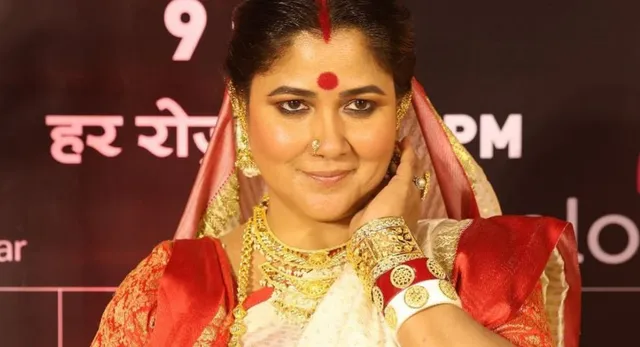
Mumbai: Actress Narayani Shastri, who has spent more than a decade working in the television industry, has spoken candidly about typecasting, her decision to stay away from Bollywood films and the creative choices she has made throughout her career. The actress, who believes in experimenting with different characters, recently joined Colors TV’s Mahadev and Sons, bringing a fresh dose of drama to the show.
After playing lead roles for nearly ten years at the beginning of her career, Shastri gradually explored negative characters as well. In a recent interaction, she discussed her approach to acting and why she prefers waiting for meaningful opportunities rather than taking up work simply to remain visible.
‘I Don’t Like Drama in My Personal Life’
Talking about the drama that comes with introducing new characters midway through a television show, Shastri said she prefers keeping her personal life peaceful. Even though she belongs to a large family, she stays away from conflicts and does not enjoy unnecessary drama.
However, she believes drama is essential for television because it keeps audiences interested. Describing her character Bhanu in Mahadev and Sons, she said the character does not create drama but is drama herself.
She added that joining a show midway does not necessarily make things difficult. Being part of a project from the beginning can be easier because an actor gets the opportunity to shape the character from the ground up.
Why Narayani Shastri Prefers Waiting for the Right Role
Shastri revealed that she has never been comfortable choosing the safest option just to stay active in the industry. She prefers waiting for good opportunities, which sometimes results in longer gaps between her television projects.
The actress said she considers herself responsible towards the audience that appreciates her work. She wants to deliver performances that viewers can enjoy rather than take up projects that may disappoint them. For her, the quality of the role matters more than the frequency of appearances.
‘The Word Comeback Should Stop Being Used’
The actress also expressed her discomfort with the word “comeback”, which is often used whenever she appears in a new show after a break.
According to Shastri, women in the entertainment industry are frequently described as making a comeback simply because they have taken time away from work. She believes an actor may voluntarily take a break to wait for better roles or focus on other aspects of life, and that should not automatically be labelled a return to the industry.
She feels the term is used too casually, particularly for actresses, and needs to be reconsidered.
Why She Has Stayed Away from Bollywood Films
Shastri explained that acting happened to her by chance, but she accepted good opportunities whenever they came her way. Her decision to do fewer films, she said, is partly linked to the uncertainty of the editing process.
She pointed out that an actor’s scenes can sometimes be reduced significantly during editing, changing the role from what was originally envisioned. While she has worked in two or three films as the leading actress and did not face this problem herself, she has seen close friends lose substantial portions of their performances despite doing good work.
Television, on the other hand, gives her a clearer idea of what she is shooting and how her character is being presented. She added that learning from the experiences of people around her has influenced her choices.
Social Media Gives Her Space to Explore Comedy
Shastri has also been sharing comedy reels on Instagram, allowing audiences to see a different side of her personality. She said television viewers had not really imagined her in comic roles, but social media has given her the freedom to experiment.
She believes digital platforms have helped her explore aspects of her acting that traditional television projects had not offered her the opportunity to showcase.
‘Television Has the Highest Level of Typecasting’
When asked whether typecasting exists on television, Shastri agreed and said it is particularly common in the medium. Once an actor becomes popular for a particular image, casting teams often continue offering similar characters.
She cited Urvashi Dholakia’s portrayal of Komolika in Kasautii Zindagii Kay as an example. The character became such a strong part of Dholakia’s identity that audiences continued associating her with negative roles. Shastri believes this perception can also make filmmakers hesitant to cast television actors in different kinds of characters.
She added that actors must make thoughtful choices to break out of such images. During the first decade of her career, she mostly played lead roles, where actresses were often expected to maintain the image of a good girl. This limited opportunities to experiment.
Shastri recalled that while working in Piya Ka Ghar, she also took up a negative role in Kusum. She credited producer Ekta Kapoor for supporting that decision and giving her the opportunity to explore a different side of her acting.
How She Deals With Criticism and Negative Comments
The actress also explained how she distinguishes constructive criticism from disrespectful online comments. She has no problem accepting feedback when it is communicated politely and in the right spirit.
However, Shastri said she blocks people who make rude or abusive remarks. She believes disagreement is perfectly acceptable, but it should always be expressed respectfully. She added that she does not want followers who lack basic courtesy while communicating.